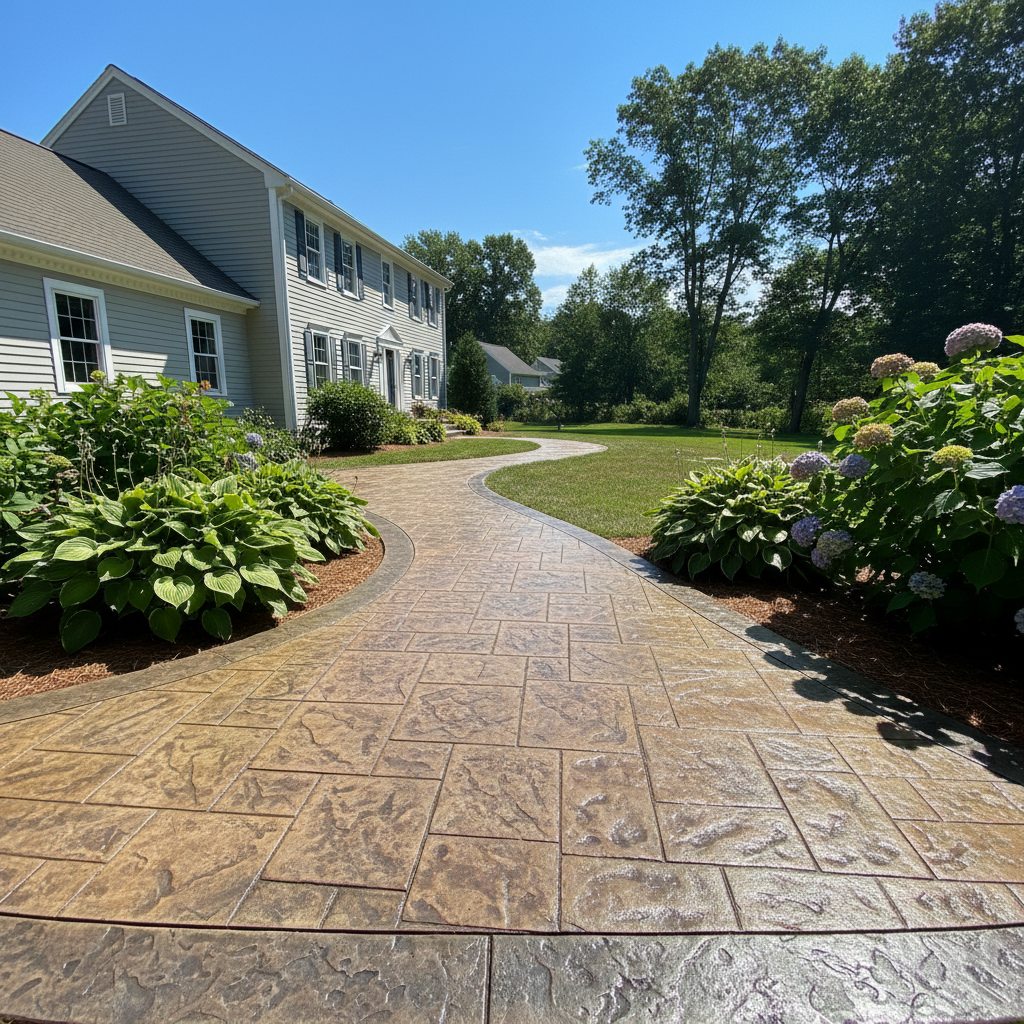
New England weather is brutal on concrete. If you have a stamped patio or walkway on your property, you already know what a few freeze-thaw cycles can do once winter really settles into Worcester County. Between the heavy snow, ice melt chemicals, and spring mud season, decorative concrete takes a beating. Worcester Concrete Precision provides stamped concrete maintenance services for homes in Worcester, MA, and here is the straight talk on how to keep your stamped surfaces from cracking up and wearing out too fast.
How to Extend the Life of Your Stamped Concrete
Sealant is very important for stamped concrete. Most people think once concrete is poured and stamped, you are good for the next twenty years. That is a fast track to ruined patterns. Here in Massachusetts, you need to reseal stamped concrete every two to three years. If water stops beading on the surface and starts soaking into the concrete, you are already running late. Pick a quality solvent-based acrylic sealer that breathes a bit and offers UV protection so the color does not fade under the summer sun.
Keep things clean, too. Do not let wet leaves sit on your patio all through November. Tannins from rotting foliage can stain the antiquing release agent right off the surface. When winter hits, ditch the metal snow shovel. A sharp metal edge will gouge the polyurethane stamps and chip the joints very quickly. Use a plastic shovel or a leaf blower to clear light powder.
Regular Maintenance Routine
You do not need a fancy arsenal to keep Stamped Concrete in line. A regular sweep and a rinse with the garden hose handles most dirt. Once or twice a year, mix up some mild dish soap and warm water, grab a medium-bristle brush, and scrub down the high-traffic areas. Rinse it off thoroughly before it dries.
Watch out for what you use to melt ice. Rock salt is cheap, but it is terrible for decorative concrete. It pits the surface and breaks down the sealer faster than you can blink. Go with calcium magnesium acetate instead. It costs a bit more, but your concrete will not thank you by flaking apart next spring.
Warning Signs of Trouble
Keep your eyes open for early trouble spots. Hairline cracks happen as concrete settles, especially in our rocky New England soil, but if a crack starts shifting or one side drops lower than the other, you have a sub-base issue. Another red flag is flaking or peeling, known as spalling. That usually means moisture got trapped under a cheap or failing sealer layer and popped the top surface right off during a hard freeze.
Fading color in high-traffic zones or spots where the sealer has worn completely white are also signs that you are past due for maintenance.
When to Call Worcester Concrete Precision
Some things you can knock out on a sunny Saturday afternoon with a roller and a bucket of sealer. Other times, you need to bring in backup. If you are seeing wide cracks, sunken slabs, or extensive surface scaling where the texture is completely gone, do-it-yourself solutions are not going to cut it. Worcester Concrete Precision deals with the aftermath of harsh Worcester winters every single year. Give Worcester Concrete Precision a call when your Stamped Patio needs a professional refresh, a deep chemical clean, or structural repairs that go beyond a simple coat of sealer.