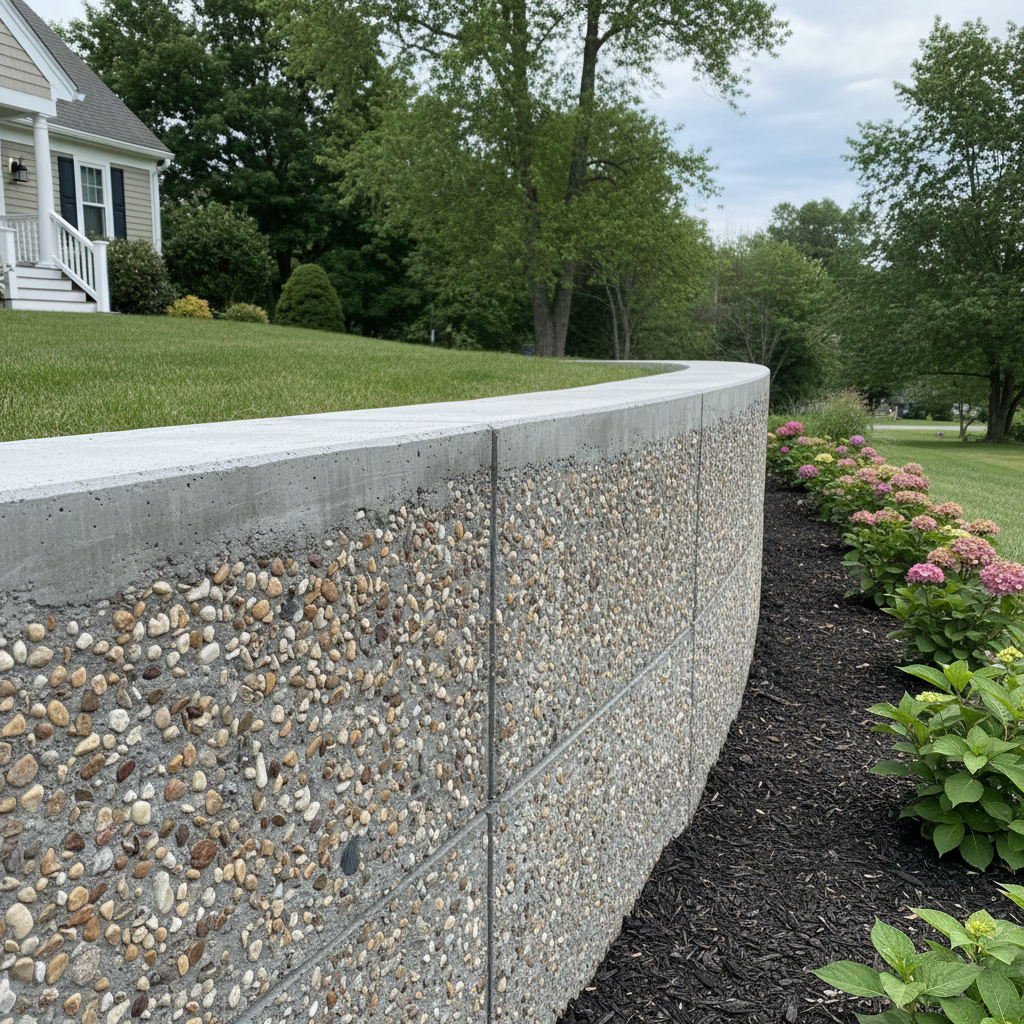
Thinking about a concrete retaining wall for your property? Good, because they're a smart investment—when done right, that is. I get a lot of questions from folks around Worcester about these things, and it's usually the same handful of concerns. So, let's just tackle them head-on. Here are the real answers to your most common concrete retaining wall questions.
What's the deal with frost heave and retaining walls here in Worcester?
Ah, frost heave. It's the bane of any outdoor concrete structure in a place like Worcester. Our winters, with all that freezing and thawing, can really mess with things if you don't plan for it. What happens is water in the soil freezes, expands, and pushes up on anything in its way – including your retaining wall. Then it thaws, and the ground settles back down, often unevenly. Over time, this constant movement can crack walls, make them lean, or even cause them to fail.
To combat this, we've got to get the foundation deep enough. That means digging below the frost line, which in our area is typically around 42 inches, sometimes more depending on the specific soil conditions. We're talking about a solid footing that isn't going to get lifted by expanding ice. It's not just about the wall itself; it's about what's underneath it. Proper drainage behind the wall also helps a ton, reducing the amount of water that can freeze and expand. Don't skimp on this part, or you'll be paying for it later.
How do I make sure my retaining wall doesn't just fall over?
That's a fair question, and it's all about engineering and proper installation. A retaining wall isn't just a pretty face holding back dirt; it's a structural element. The biggest thing is making sure the wall is designed to handle the pressure of the soil behind it. That pressure isn't just straight down; it's pushing outwards. We factor in soil type, how much slope there is, and any extra weight on top of the soil (like a driveway or a building).
For concrete walls, this usually means a strong footing, often with rebar reinforcement. We might also use a 'deadman' anchor system or tie-backs for taller walls. These are basically anchors that extend back into the soil to give the wall more stability. And like I said before, drainage is huge. If water builds up behind the wall, it adds a tremendous amount of hydrostatic pressure, which can push even a well-built wall right over. It's not just about the concrete; it's about the whole system working together.
Do I really need drainage behind my concrete retaining wall?
Absolutely, 100%, yes. If you take one thing away from this, it's that drainage is non-negotiable for a long-lasting retaining wall, especially with our New England weather. Think of it this way: when it rains or snow melts, that water soaks into the soil behind your wall. If it can't get out, it builds up. Water is heavy, and that trapped water creates immense pressure against your wall. It's called hydrostatic pressure, and it's a primary cause of retaining wall failure.
What we do is install a perforated drain pipe (often called a 'French drain' or 'weep pipe') at the base of the wall, behind it. This pipe is surrounded by gravel, and then we put a filter fabric over the gravel to keep soil from clogging the pipe. The pipe collects the water and directs it away from the wall, usually to a lower, safe discharge point. Without it, you're just asking for trouble down the line.
How long will a concrete retaining wall last?
A properly built concrete retaining wall, designed and installed by professionals who know what they're doing, should last you many, many decades. We're talking 50 to 100 years, easily. Concrete is an incredibly durable material, especially when reinforced correctly. It stands up to our harsh winters, freeze-thaw cycles, and general wear and tear better than almost anything else.
The key phrase there is 'properly built.' If you cut corners on the foundation, drainage, or reinforcement, then all bets are off. But if you invest in a quality job upfront, you're putting in a structure that will likely outlive you and your kids. That's why I always tell folks, it's not just about the immediate cost; it's about the long-term value. Here at Worcester Concrete Precision, we build 'em to last.
What kind of maintenance does a concrete retaining wall need?
This is one of the best things about concrete retaining walls: they're pretty low maintenance. Once it's in, you're mostly just keeping an eye on it. Here's what I tell my clients:
- Keep the drainage clear: Make sure the outlet for your drain pipe isn't blocked by leaves, dirt, or debris. If water can't get out, it's going to build up behind the wall.
- Watch for cracks: Small hairline cracks are often just surface-level and normal as concrete cures and settles. But if you see cracks that are widening, or if the wall starts to lean or bulge, that's a sign of a bigger problem. You should call someone to take a look.
- Don't overload the area above: Avoid putting too much weight on the soil directly behind the wall, especially if it wasn't designed for it. That means no heavy equipment, big piles of rock, or new structures unless you've had it checked out.
- Keep vegetation in check: While some plants can look nice, avoid planting large trees or shrubs too close to the wall. Their roots can grow into and damage the concrete over time.
That's really about it. A quick check a couple of times a year, especially after heavy rains or snowmelt, is usually enough.
Can I build a concrete retaining wall myself?
Look, I'm all for DIY projects, but a concrete retaining wall isn't really one of them. Especially if it's holding back a significant amount of earth or supporting something important. This isn't like pouring a small patio slab. There's a lot of engineering that goes into these things.
You've got to understand soil mechanics, hydrostatic pressure, proper reinforcement, drainage systems, and local building codes (which often require permits and inspections for retaining walls over a certain height). Getting the foundation right, mixing and pouring concrete correctly, and ensuring proper compaction of backfill are all critical steps that, if messed up, can lead to a wall failure. And a failed retaining wall isn't just an eyesore; it can be a safety hazard, cause property damage, and be incredibly expensive to fix.
For anything more than a very small, decorative garden border, I strongly recommend hiring a professional. We've got the experience, the equipment, and the know-how to do it safely and correctly the first time. It's an investment in your property's safety and longevity.
What's the difference between a gravity wall and a cantilevered wall?
These are two common types of concrete retaining walls, and they work differently to hold back soil. A gravity wall relies on its sheer weight and mass to resist the pressure of the soil behind it. Think of it as a really heavy block. They're often thicker at the base and taper up. These are typically used for shorter walls or where the soil conditions are very stable.
A cantilevered wall, on the other hand, uses a thin stem connected to a wider, reinforced concrete footing that extends both under the wall and into the backfill. The weight of the soil on top of the footing helps to stabilize the wall, and the stem acts like a lever (a cantilever) to resist the pressure. These walls are much more efficient for taller applications because they use less concrete than a gravity wall of the same height, but they require careful engineering and reinforcement with rebar. You'll see cantilevered walls more often in commercial projects or for significant elevation changes on residential properties around places like the hills of Tatnuck. Both types need proper design and construction to do their job right.
How do I know if I need a retaining wall at all?
You probably need a retaining wall if you have a significant slope on your property that you want to level out. Maybe you want to create usable space, prevent erosion, or manage water runoff. If your yard is constantly washing away in heavy rains, or if you're trying to put a patio or driveway on a steep incline, a retaining wall is likely your solution.
They're also essential if you're creating different levels in your landscape design, or if you need to hold back soil to prevent it from encroaching on a foundation or other structure. If you're unsure, the best thing to do is have a professional come out and take a look. We can assess your specific situation, the soil, the grade, and tell you if a retaining wall is the right answer for your needs, and what type would work best.