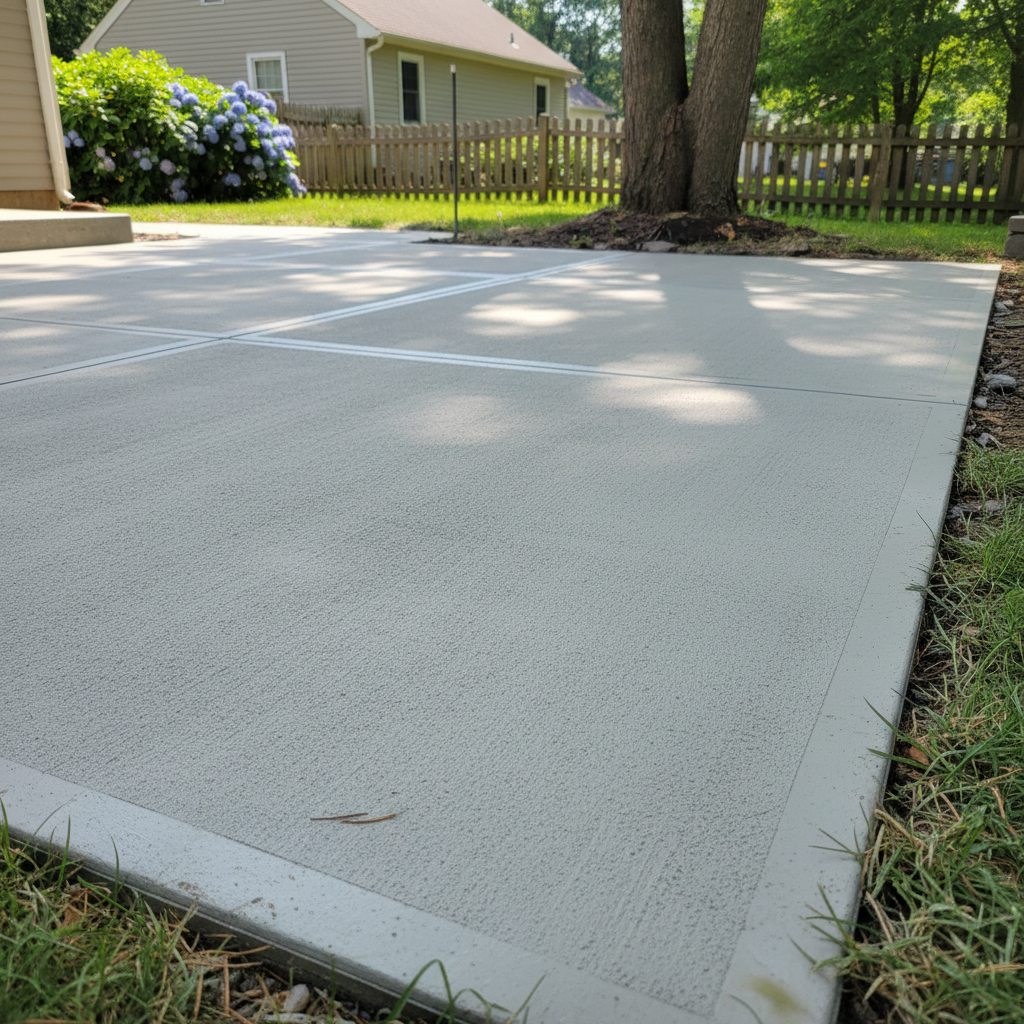
What's the deal with concrete cracking? Is it normal?
Yeah, it's pretty normal. I know, nobody wants to see cracks in their brand new driveway or patio, but concrete shrinks as it dries and cures. That shrinkage creates tension, and sometimes that tension wins, leading to a crack. Think of it like a really big, rigid sponge drying out.
Now, not all cracks are created equal. Hairline cracks, especially within the first year or two, are often just surface-level and aren't usually a structural concern. We try to control where these cracks happen by putting in control joints – those saw cuts or grooves you see. They're designed to give the concrete a weak point to crack along, keeping it neater and less noticeable. If you've got wide cracks, uneven cracks, or cracks that are growing fast, that's when you might have a bigger issue, maybe with the sub-base or drainage. That's when you should definitely give us a call at Worcester Concrete Precision to take a look.
How long does concrete flatwork actually last around here?
That's a great question, and it's one I get all the time. Good quality concrete flatwork – a driveway, patio, or sidewalk – should last you a good 20 to 30 years, sometimes even longer, especially if it's installed right and you take care of it. But here in Worcester, we've got some challenges. Our winters are brutal, with all that freezing and thawing, and the salt we use on our roads and sidewalks doesn't do concrete any favors. That freeze-thaw cycle is a real killer, causing the concrete to expand and contract, which can lead to spalling or popping.
The quality of the mix, proper installation (like making sure the sub-base is prepped correctly and there's good drainage), and regular maintenance all play a huge role. If someone's cutting corners on the mix or the prep, you're not going to get that kind of longevity.
Do I really need to seal my concrete? And how often?
Absolutely, you should seal your concrete, especially around here. Think of it like putting a clear coat on your car or stain on your deck – it's protection. Sealing helps protect the concrete from moisture penetration, which is key to fighting off that freeze-thaw damage I just mentioned. It also helps resist stains from oil, grease, and even things like leaves or spilled drinks on your patio.
For most residential flatwork, I recommend sealing it every 2-5 years. If it's a high-traffic area, or if it's constantly exposed to harsh conditions like a lot of de-icing salts, you might want to do it more frequently. You'll know it's time when water stops beading up on the surface and starts soaking in. It's a relatively inexpensive maintenance step that can significantly extend the life of your concrete.
What's the best way to clean my concrete driveway or patio?
For general cleaning, a good stiff brush, some dish soap, and a hose will do wonders. For tougher stains, you can get specific concrete cleaners at most hardware stores. Just make sure to follow the instructions carefully and test it in an inconspicuous spot first. Pressure washing can be effective, but you've got to be careful. Too much pressure, or holding the nozzle too close, can actually damage the surface of the concrete, especially if it's older or not super high quality. You can etch it, or even expose the aggregate, which you don't want. If you're going to pressure wash, use a fan tip and keep it moving. Don't just blast one spot.
My concrete is sinking in one spot. Can it be fixed, or do I need a whole new slab?
That's a common issue, especially in older neighborhoods like Tatnuck where the soil might have settled over time or drainage wasn't ideal. Sometimes, yes, it can be fixed without tearing everything out. This is often done with a process called concrete lifting, or 'mudjacking' or 'polyjacking'. Basically, we drill small holes in the sunken slab and then pump a material (either a cementitious slurry or an expanding polyurethane foam) underneath it. This material fills the voids and lifts the slab back up to its original level. It's a lot less disruptive and usually much more affordable than replacing the whole thing. The trick is figuring out why it sank in the first place. If it's ongoing drainage issues, you'll want to address that too, otherwise, it might just sink again.
How long before I can drive on my new concrete driveway?
Patience is key here. I know you're excited to use your new driveway, but rushing it can cause permanent damage. For walking on it, you can usually do that after about 24 hours, maybe a little sooner if it's hot and dry out. But for driving a car on it, you really need to wait at least 7 days, and ideally, 10-14 days. Concrete gains most of its strength in the first week, but it continues to cure and harden for a much longer period. Driving heavy vehicles on it too soon can cause cracks, ruts, or other surface damage that you won't be able to fix. We'll always give you specific instructions for your job, but that 7-14 day window is a good general rule of thumb. It's worth the wait, trust me.