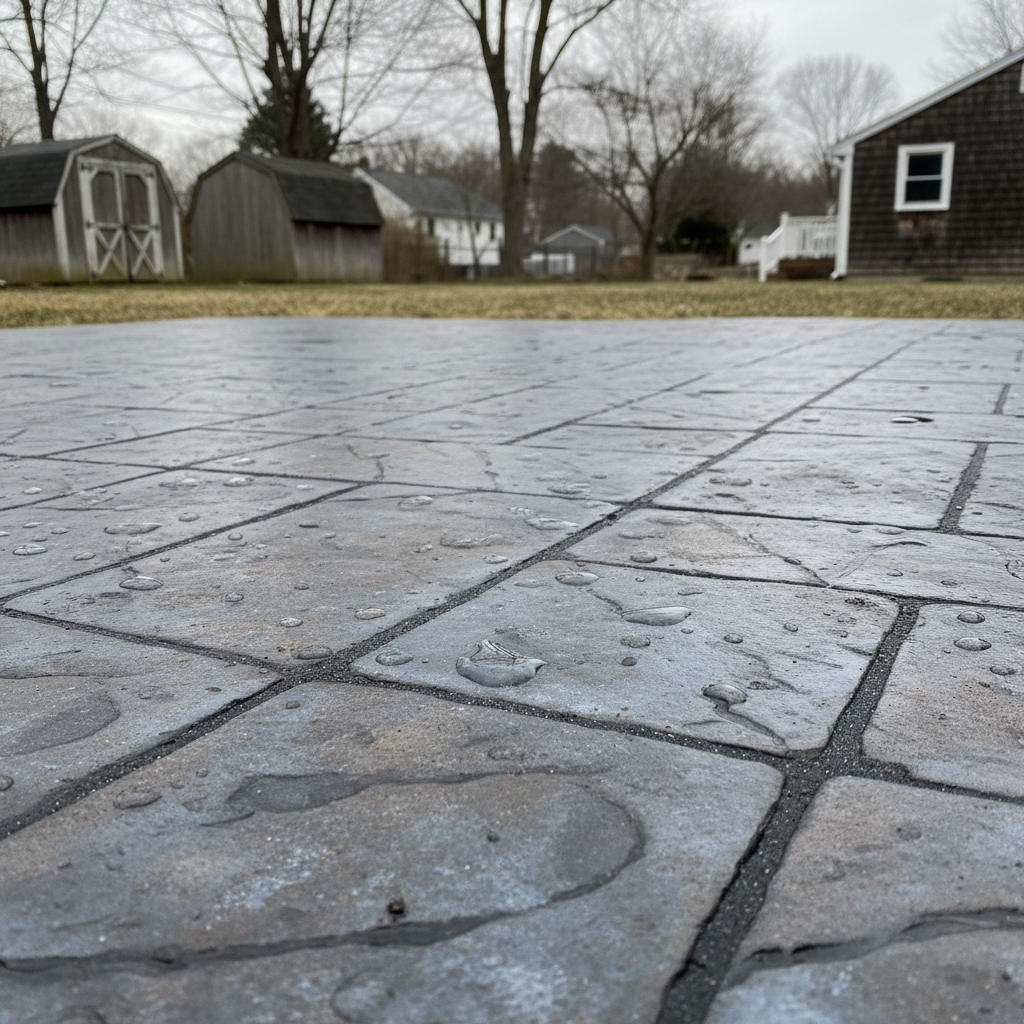
Alright, let's talk concrete. You're probably looking at that old cracked walkway or dreaming of a new patio out back, and you're wondering, "Can I do this myself?" It's a fair question, and the answer, like most things, isn't a simple yes or no. As someone who's poured more concrete than I can count around Worcester, I've seen it all – the good, the bad, and the really ugly DIY jobs.
Before You Even Think About Pouring
First things first: planning. This is where you can absolutely do a lot of the legwork yourself. You need to decide what you're building. A small, simple stepping stone path? Maybe a DIY project. A 10x20 foot patio that needs to drain properly and support furniture? That's a whole different ballgame. Sketch it out, measure everything twice, and then measure it again. Think about drainage. Water is the enemy of foundations and concrete, especially with our freeze-thaw cycles here in New England. You don't want water pooling against your house or under your new slab.
Permits. Don't skip this. For most significant concrete work, especially if it's attached to your house or changes the grade of your property, you'll need one from the city of Worcester. A quick call to the Inspectional Services Department can save you a huge headache down the road. Trust me, it's not worth the risk of having to tear something out later.
Utility lines. Call Dig Safe (811) before you dig a single inch. Seriously, it's free, it's easy, and it prevents you from hitting a gas line or an electrical conduit. You do not want that surprise.
What You Can Realistically DIY
For small, non-structural projects, you can definitely roll up your sleeves. Think about:
- Small stepping stones: If you're just setting a few pre-cast stones or pouring a couple of small, individual pavers, you can probably handle this. Digging out a shallow area, adding a little gravel base, and leveling them out isn't rocket science.
- Patching small cracks: For hairline cracks or minor spalling on an existing slab, you can buy patching compounds at the hardware store. Clean the area thoroughly, follow the instructions, and you can extend the life of your concrete a bit.
- Decorative resurfacing: If your concrete is structurally sound but looks ugly, you can apply a thin layer of resurfacing product. This is more like painting than pouring new concrete, but it still requires good prep work.
The key here is 'small' and 'non-structural.' If it's not going to bear significant weight, if it's not connected to your home's foundation, and if it's not going to be a major safety hazard if it fails, you might be able to tackle it. But even then, proper base prep and knowing how to mix and finish concrete are crucial.
When to Call a Pro (Which is Most of the Time)
Look, I'm a contractor. I'm biased, sure, but I'm also honest. For anything beyond the smallest, simplest jobs, you really should call in a professional. Here's why:
- Slabs, driveways, patios: These aren't just flat surfaces. They need proper excavation, a compacted sub-base (often gravel), rebar or wire mesh for reinforcement, correct expansion joints, and a precise slope for drainage. If you don't get the base right, your concrete will crack and settle. And with our clay-heavy soil around areas like Tatnuck or Burncoat, proper drainage and base prep are even more critical.
- Mixing and pouring: Concrete isn't just cement and water. It's a specific ratio of aggregates, cement, and water. Too much water, and it's weak. Too little, and it's impossible to work with. Then there's the timing. Once that truck shows up, you've got a limited window to pour, level, and finish before it starts to set. It's physically demanding and requires experience to get a smooth, durable finish.
- Tools and equipment: Do you own a concrete mixer, screeds, floats, edgers, groovers, and power trowels? Probably not. Renting them is an option, but knowing how to use them effectively takes practice.
- Longevity and appearance: A professionally poured slab from a company like Worcester Concrete Precision will last for decades and look good doing it. A DIY job, if not done perfectly, can look rough, crack prematurely, and become an eyesore or even a tripping hazard.
- Cost of mistakes: Fixing a bad concrete job is often more expensive than doing it right the first time. You have to break out the old concrete, haul it away, and then pay to have it repoured. It's a huge waste of time and money.
After the Pour: Curing and Care
Whether you DIY or hire a pro, curing is vital. Concrete doesn't just dry; it cures. This is a chemical process that strengthens it. You need to keep it moist for at least 3-7 days, sometimes longer depending on the mix and weather. This means misting it with water, covering it with plastic sheeting, or using a curing compound. If you let it dry out too fast, it'll be weaker and more prone to cracking.
Once it's cured, keep it clean. Sweep off debris, and if you live near trees, try to keep leaves from sitting on it for long periods, especially in the fall. For winter, be careful with de-icing salts. Many common salts can damage concrete, especially newer concrete. Look for products labeled "concrete-safe" or use sand for traction.
Ultimately, doing concrete work is a big undertaking. For small, non-critical projects, you might save a few bucks and gain some bragging rights. But for anything that needs to last, look good, and stand up to our tough Worcester weather, calling in the professionals is usually the smartest move. We've got the experience, the tools, and the know-how to get it done right the first time.